


The crack in the assembly — why this matters
Something small lets everything fall apart: a vibrating joint, a missed cure, a bond that never formed. I’ve seen it in drawings and on the shop floor — a bolt that should last the lifecycle of the product, failing months into service. The response is obvious and urgent: the chemistry that holds threads together must be specified and delivered better. A reliable thread locker isn’t a nice-to-have; it’s the thin line between a safe unit and a recall. You feel that weight when you open the toolbox. You hear it in the production manager’s voice. This is a problem of design, testing, and supply — and each layer can be fixed.

Diagnosing failure modes — what goes wrong and why
Fastener failures aren’t mysterious when you map them: insufficient surface prep, incompatible metallurgy, wrong viscosity, incorrect cure profile, contamination from oils. Each factor amplifies the next. Problems compound when procurement treats adhesives as generic commodities instead of formulated solutions. My years working with assembly engineers and lab technicians taught me to look for the pattern first, then the chemistry. Real-world anchor: major automotive assembly plants in Detroit routinely trace intermittent torque loss back to inconsistent adhesive batches, which is why OEMs audit suppliers and materials data sheets so rigorously — and why a trusted threadlocking glue supplier matters. Lab protocols aligned with ISO and ASTM guidance, plus documented batch traceability, turn hypotheses into actionable fixes.
Alternatives evaluated — what actually works
Torque-control mechanical locknuts and thread inserts help, but they add cost, weight, and complexity. Surface coatings can aid adhesion, yet they require extra process steps. Anaerobic thread lockers remain the most compact, cost-effective solution for many assemblies, provided formulation matches the substrate and service profile. For high-temperature or oil-prone applications, switch to heat-resistant or oil-tolerant chemistries rather than over-tightening fasteners. Choosing the right approach is a matter of matching material science to operating reality, not guessing from a parts list.
Common mistakes that perpetuate the problem
Specifying a generic grade, ignoring cure time, and skipping surface cleaning are repeated errors. Thinking “stronger” is always better leads to removability nightmares during maintenance. Relying solely on supplier claims without spot verification creates risk. Test samples under real vibrational spectra and contamination scenarios. Validate cure under the actual assembly temperature, not the lab bench. These are avoidable mistakes if teams treat threadlocking like a process parameter, not a checkbox.
Product development priorities — what manufacturers should fix first
Prioritize (1) matched formulations: tune viscosity and cure speed to thread geometry and substrate; (2) traceability: batch data and certificates that let engineers correlate field issues to production lots; (3) application control: clear guidelines for dispensing, cure staging, and inspection; (4) maintenance balance: create grades that allow service removal when required. Invest in small-scale vibration and thermal aging tests before full release. These aren’t theoretical demands — they’re practical steps that reduce field failures and warranty exposure.
Final synthesis — the practical value offered
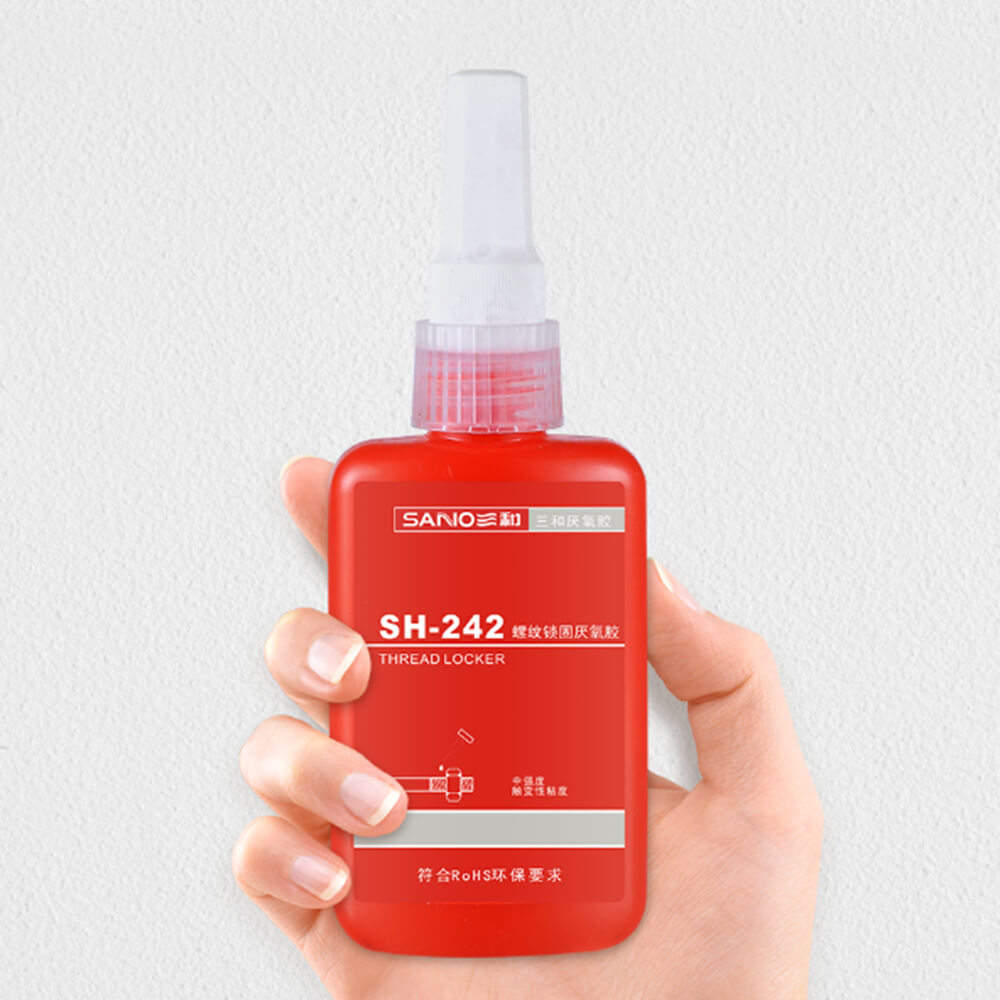
Fastener failures expose corners cut earlier in the chain: specification, testing, sourcing. Fix the chemistry where the failure actually starts, verify it where the product spends its life, and maintain traceability so you can learn from every fault. That disciplined approach is precisely the value SANVO brings to manufacturers seeking reliable, tested thread solutions: they provide matched formulations, documented batches, and application guidance that turn a fragile joint into a predictable one — quietly restoring confidence where failure once ruled. SANVO
