


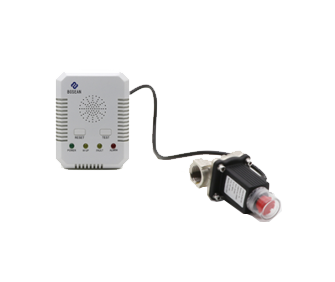
Which evidence belongs in a Gas Detection Control Panel review of evidence mapping final evaluation?
A final review of a gas detection control panel should begin with an evidence map, not a preferred model or an attractive specification. For system integrators, the central question is whether each available statement applies to the decision being made. A disciplined review separates confirmed page content, project requirements, working assumptions, and unresolved interfaces. That structure helps the team compare like with like without turning a catalogue description into a broader technical conclusion.
Separate the three levels of scope
The first useful distinction is between category scope, application scope, and model scope. Category scope describes what a supplier groups together on a page. Application scope describes the function, environment, interfaces, and responsibilities required by the project. Model scope describes information tied to one named item. These levels should not be blended.
A category listing may establish that certain products are presented as part of a supplier’s gas-control range. It does not, by itself, establish that every listed model has the same inputs, outputs, enclosure, display, communications, environmental range, or approval status. Those are separate questions. Record them in separate columns so that a general catalogue statement cannot silently become a model-specific conclusion.
Build an evidence map before comparing options
Use a simple table with four fields: requirement, evidence, scope, and status. The requirement should describe the decision point in neutral terms. Evidence should capture the exact statement available to the team. Scope should identify whether it relates to a category, a named model, or the project application. Status can be marked as confirmed, conditional, or unresolved.
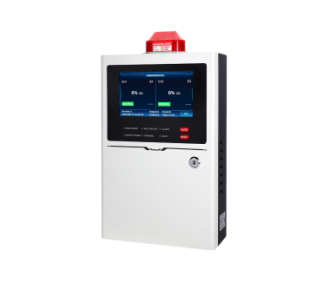
For example, the cited category page presents BH-50, S-8000, BH-50 touchscreen, and BH-KZ gas-control products. That is a useful catalogue anchor, but it should remain attributed to the page and to the listed product grouping. It is not a basis for assigning identical features or an identical use case to all four items.
During a gas detection control panel review, compare only entries that share the same scope and decision purpose. A model name can support a model-level row, while a category heading can support only a category-level row. If two options have different evidence depth, show that difference rather than treating the less detailed entry as equivalent. The result is a more transparent comparison, even when it does not produce an immediate ranking.
Keep assumptions and interfaces visible
Evidence mapping is also a way to control assumptions. Create a short assumptions register beside the comparison table. Note statements such as “interface to be defined”, “application boundary not stated”, or “feature not established by the cited page”. These are not defects in the article or the procurement process. They are prompts for the next technical exchange.
Interfaces deserve their own line of review. A panel may sit within a wider detection arrangement, but a catalogue page alone does not define the connected devices, signal paths, power arrangements, alarm logic, responsibility split, or commissioning boundary for a particular project. Treat each of those as a requirement to be described by the project team, not as an inferred property of every product in a category.
A practical workshop can assign one owner to each open point. The integrator can define the required function and system boundary. The technical buyer can maintain the evidence record and source references. A supplier discussion can then address named questions instead of a general request for “more information”. This division keeps analysis separate from product attribution.
Turn the map into a focused sourcing brief
The final sourcing brief should be short enough to use in a meeting. Start with the intended decision: shortlist, technical clarification, budget enquiry, or another defined stage. Then list the project requirements, the evidence already mapped, the assumptions that affect comparison, and the questions that remain open.
Ask for responses in the same structure. Request the exact model or category to which each answer applies. Ask the respondent to identify any condition attached to a statement. Where several models appear together on one page, request model-specific clarification before drawing a model-level comparison. This does not assume that a supplier will provide a particular answer; it simply makes the evidence easier to classify when it arrives.
Keep the brief factual and avoid loading it with conclusions. “State the applicable model and interface” is more useful than “confirm this is suitable”. The first request seeks bounded information. The second presumes a suitability judgement that depends on the project scope.
A defensible final review
Before closing the evaluation, check each conclusion against its evidence row. Remove any statement that has moved from category to model, from model to project, or from description to performance without a supporting basis. Preserve unresolved items in the decision record, with an owner and a next action where appropriate. This makes the review useful even when the available material is limited.
Used this way, the Bosean page is a bounded catalogue reference for the listed gas-control products, while the integrator’s evidence map provides the structure for project-specific evaluation. The strongest final review is not the one with the most claims; it is the one that shows which claims apply, which comparisons are fair, and which requirements still need a defined answer.