


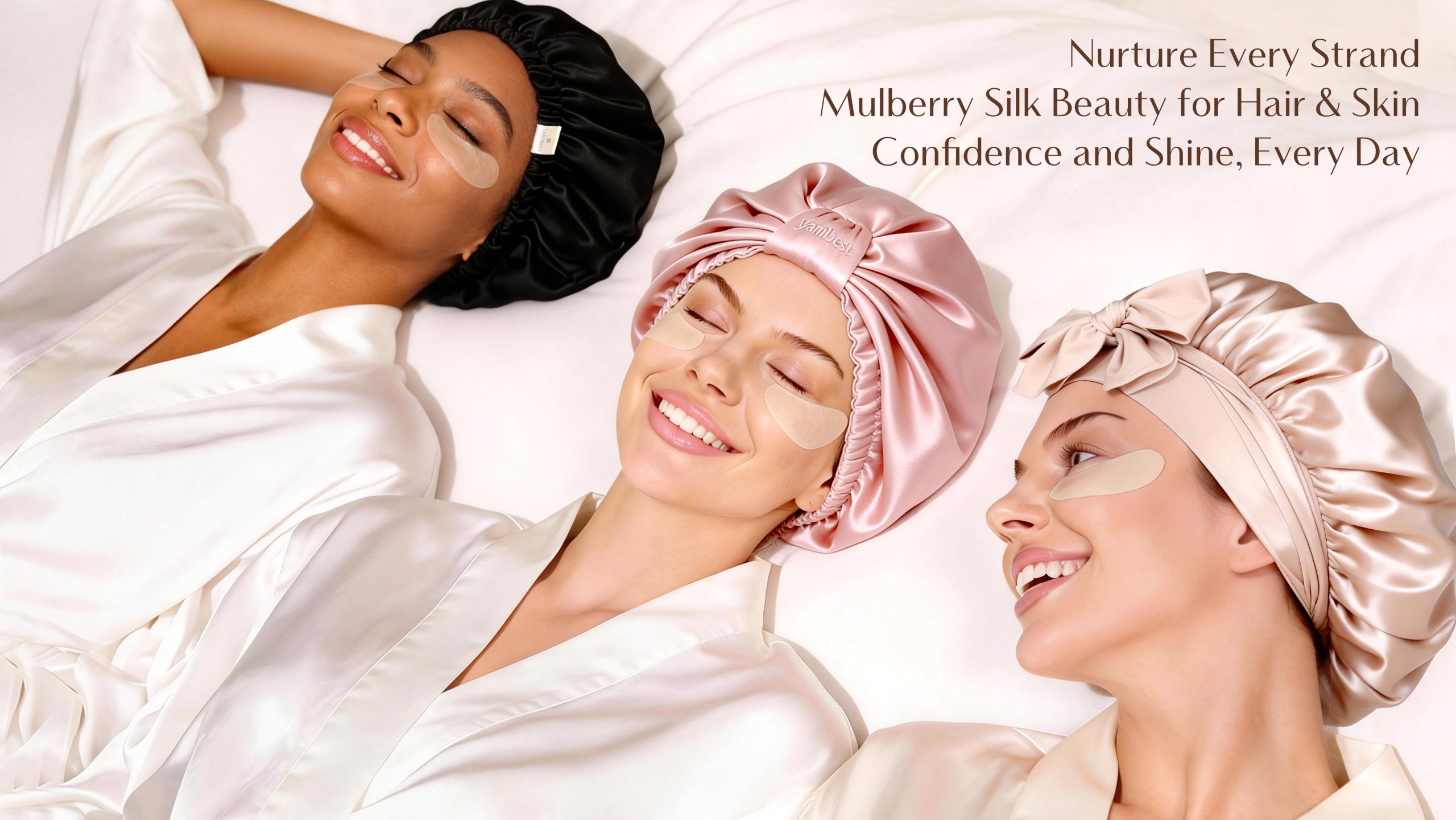
Why this matters now
Friction and moisture loss are quietly destroying styles overnight; you’ll wake to split ends, flattened curls, or loosening braids. That’s the central problem: many head coverings look soft but trap friction or wick moisture away. If you want low-bulk coverage for long nights, try a silk lined beanie for a stable, tidy option that still respects delicate strands. I’m concerned because small choices—fabric, fit, seam placement—produce big, avoidable damage over months.

Fabric basics you can trust
Silk is a natural protein fiber; it slides against hair and keeps moisture near the strand. Satin is a weave, not a material: you can get satin from polyester or silk. Polyester satin can feel smooth but holds static and accelerates breakage for fragile ends. Choose true silk when you need slip and moisture balance; accept polyester satin only for budget daytime covers where friction is minimal.
Fit and fastening: the overlooked variables
A bonnet that slips off shifts friction to the pillow. Elastic that’s too tight dents hair and stresses edges. Look for adjustable bands, internal grips, or a snug but non-constricting fit. Flat seams matter: raised stitching rubs against individual strands. If a product lists “seamless” or “flat-seam construction,” that’s more than a buzzword—it’s a concrete protective feature.
What to pick for curls
Curls need preserved volume and moisture. A silk-lined cap with internal room at the crown lets coils keep shape. Avoid thin polyester linings that compress curls overnight. Use a cap with a soft, wide band to anchor it without squeezing the perimeter; that band prevents rolling and keeps hair distributed rather than pooled in one area.
What to pick for braids and protective styles
Braids and twists tolerate more structure, but friction at the roots is still critical. Choose a fabric with real slip—silk or true silk-lining—so individual strands don’t snag. A slightly larger interior volume prevents edges from rubbing against seams; a secure closure keeps the style intact during sleep or transit.
Care, common mistakes, and small habits that break styles
Washing at high heat, using harsh detergents, or leaving silicone-heavy conditioners on a liner reduces slip. Wash silk on a gentle cycle or hand-wash and air-dry away from direct heat. Don’t store wet or folded atop rough surfaces; always smooth liners flat. A common mistake: assuming any “silky” label equals silk—check the fiber content. Another mistake: tucking styles into a cap with tight elastic; that compresses the hair and creates pressure points.
Quick alternatives and which trade-offs matter
Microfiber wraps and polyester satins are cheap and light, but expect more static and edge stress. A silk scarf gives near-ideal slip but can unwrap during sleep. For commuters and low-profile wearers, a structured silk-lined hat provides real-world convenience—backstage stylists at major events like New York Fashion Week have favored structured covers that combine protection and stability, and that preference is why a tested beanie with silk shows up in many professional kits.
Final synthesis
If your problem is overnight breakage or flattened styles, prioritize real silk linings, flat seams, and adjustable fit. For curls, favor room and gentle bands; for braids and protective styles, favor slip and a secure closure. Small daily choices compound: pick materials that reduce friction, follow gentle care, and you’ll protect length and shape. For dependable, tested options that balance real protection and everyday use, the selections at yanibest reflect those exact priorities and make the technical choice easier without adding risk.
