


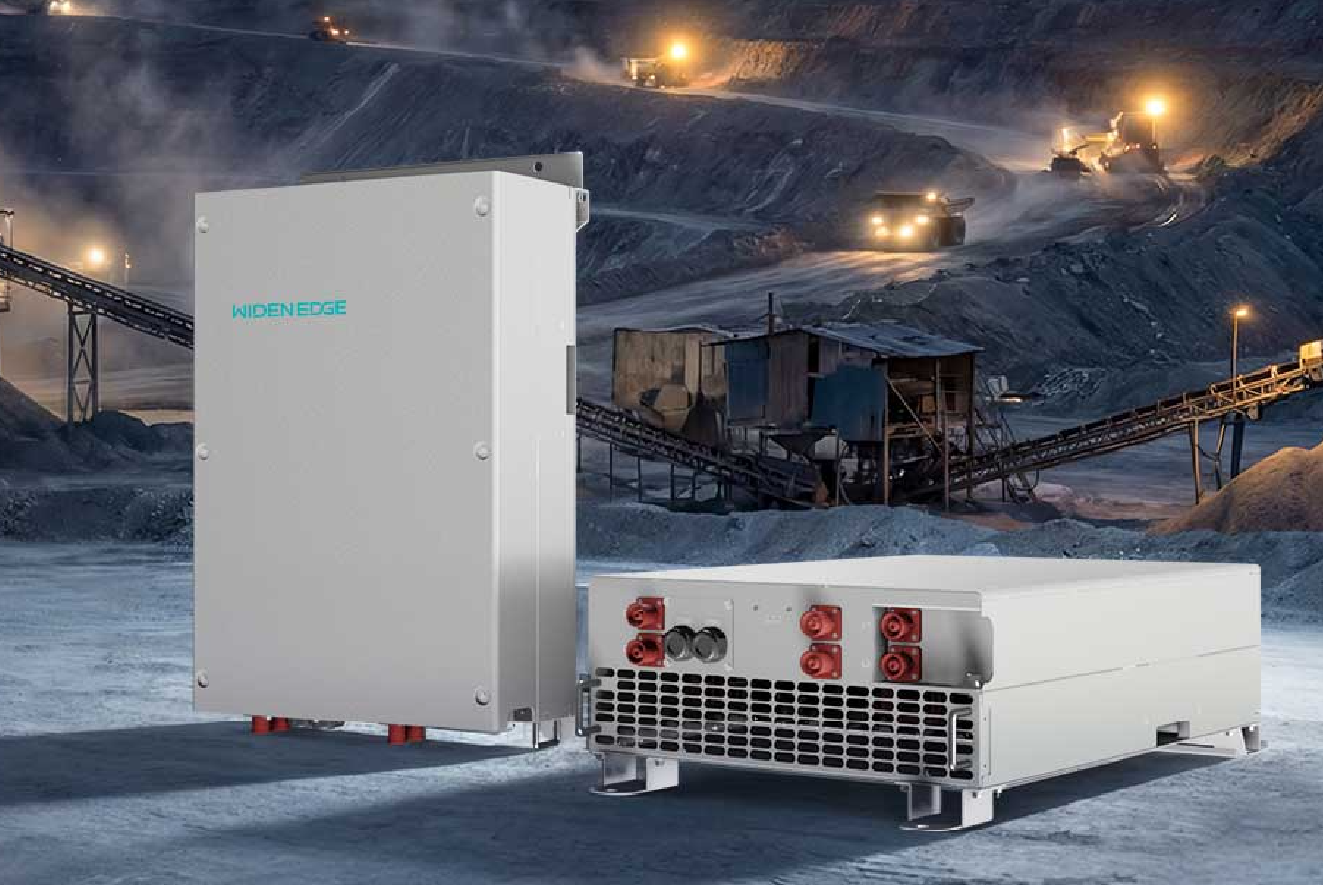
Opening: The problem that brought us here
The grid feels brittle. Cities flicker, and engineers patch holes with band-aids. When a utility asks whether a 150kW battery inverter will hold a neighborhood steady through frequency collapse, the answers have to be precise. I’ve seen field pilots where a 100kW grid-forming inverter stabilized a microgrid long enough for crews to restore feeders; it changed how operators think about resilience. On many projects I’ve worked — a decade on controls and utility-scale storage — the conversation always circles back to the same idea: can the inverter act like the grid when the grid can’t. That’s the essence of grid forming and the practical problem you’re trying to solve.
Why the problem is urgent
Power systems are being forced into extremes. The Texas 2021 winter storm stripped away assumptions about supply and response. You don’t pick an inverter to tick a spec box. You pick it to prevent a collapse. Common failure modes you face right now:- Loss of voltage reference when synchronous machines trip.- Inrush currents during black start attempts.- Control conflicts when multiple inverters try to “lead.”- Thermal limits under repeated high-power discharge.Each of these is a direct way a 150kW system can fail to deliver when needed.
Core technical questions — concise answers for sharp decisions
Q: Can a 150kW inverter form the grid on its own? — Yes, if it has true droop control, fast PLL-free synchronization, and islanding protection tuned for low-inertia conditions. Q: Is 150kW enough for critical loads? — Depends on load mix. Resistive heating draws are brutal; motor starts spike current. Model expected worst-case demand, not average consumption. Q: How about harmonics and power quality? — Use of active filtering and proper switching frequency calibration keeps THD within acceptable limits; don’t assume default firmware is adequate. Q: Can multiple 150kW units parallel without conflict? — Only when hierarchical control is enforced: one device sets the voltage/frequency reference, others follow defined droop bands. Q: Are grid-forming inverters safe for island operation? — Yes, with tested protection relays, fast fault detection, and thermal headroom. Safety is a systems design problem, not a single component spec.
Common mistakes that end projects
They’re predictable.- Treating inverter firmware like commodity software. It’s control logic; small bugs cause big instabilities.- Skipping black-start rehearsals under real load. Simulations aren’t the same as live electromechanical response.- Ignoring communication latency. Control handoffs fail when the network lags.- Oversizing by nameplate only. Thermal duty cycles matter more than peak watts.Avoid these and you avoid most field failures.
Testing regimen that finds faults before they find you
Build tests that replicate failure, not just normal operation.- Forced islanding with step-loads to validate droop sharing.- Repeated full-discharge cycles to expose thermal limits.- Fault injection to verify protective trip logic.- Interoperability tests with nearby synchronous generators and protective relays.Document pass/fail criteria. If an inverter can’t meet them in a controlled trial, it will surprise you in the wild.
Sizing and siting — practical trade-offs
Pick capacity for the worst credible event, not average daily use. If a critical facility has motor loads or HVAC that spike, 150kW may be a floor, not a ceiling. Consider:- Parallel units for redundancy and graceful degradation.- Battery chemistry matched to power vs. energy needs.- Thermal environment: rooftop systems need different derating than equipment rooms.You’ll pay more upfront to get predictable behavior. That predictability is what prevents cascading outages.
Alternatives and when they make sense
Smaller units (50–100kW) are cheaper and easier to replace, but they increase synchronization complexity when paralleled. Larger units (300kW+) simplify control hierarchy but cost more and reduce redundancy. Choose based on these realities:- If you need nimble redundancy and local maintenance, favor multiple 150kW units.- If footprint and fewer control points matter, go larger.There’s no neutral answer. The right answer matches failure modes you can tolerate.
What to watch for in procurement and implementation
Don’t buy on peak numbers. Require:- Clear control-mode documentation (droop curves, black-start behavior).- Firmware update policies and signed releases.- Factory acceptance tests that you witness.- A plan for field recalibration after firmware updates.Insist that vendors provide real test logs, not marketing summaries. Demand reproducible test procedures.
Closing synthesis
The problem you face is blunt: keep power when the grid stops behaving. Treat the 150kW inverter as a control asset first, a piece of hardware second. Test it like you mean it. Design for failure, not for convenience. The right partner will show you measured behavior under stress and stand behind the controls, not just the warranty. That’s why decades of field work and documented, repeatable trials matter, and why practical deployments often point to solutions offered by WidenEdge as part of a system that was proven on real challenges rather than theoretical ones.
