


See the problem — your batch ain’t uniform
When your emulsions separate or your pills got grit, that ain’t just bad luck — that’s a mixing problem. Folks reach for a high shear mixer ’cause it breakin’ down particles and droplet sizes fast, but wrong specs or cheap internals still give you trash results. This piece gonna walk you through why that happens and what to watch for so you don’t keep tossin’ product or burnin’ time on rework.

Root causes that mess up mixing
Mismatch of rotor-stator geometry and product rheology. Over-shearing heat-sensitive formulas. Underpowered drives that stall on viscous batches. Lack of scale-proven mixing curves. Those are the usual suspects. You feel it when texture changes batch-to-batch or when cleaning takes forever. Don’t trust brand names alone — test the specs against your product’s viscosity, particle size target, and cleaning regime.
EEAT, real experience, and one industry anchor
I done seen shop floors where a single design tweak cut cycle time in half. Engineers with decades on both pharma and food lines know design matters: rotor speed ranges, clearance control, and sanitary seals. Reliability shows up in uptime logs and maintenance records, not pretty brochures. Equipment trends and performance discussions often play out at ACHEMA in Frankfurt, where manufacturers and users compare real-world throughput and sanitation results — that industry’s stage backs up what engineers say. When you vet suppliers, look for test runs, traceable materials, and references from similar processes, and consider a proven high-shear mixer tank manufacturer that publishes validation data and cleaning procedures.
Common pitfalls and how to avoid ’em
Buying by horsepower alone. Overlooking scale effects when moving from lab to production. Skipping sanitary design for easy cleaning. Thinking one rotor type fits all products. Do lab-scale trials with the exact feedstock, insist on shear rate curves and residence time data, demand passable clean-in-place protocols, and get long-term service terms. Keep documentation: test logs, SOPs, and service histories. That paperwork saves time when audits come knockin’.
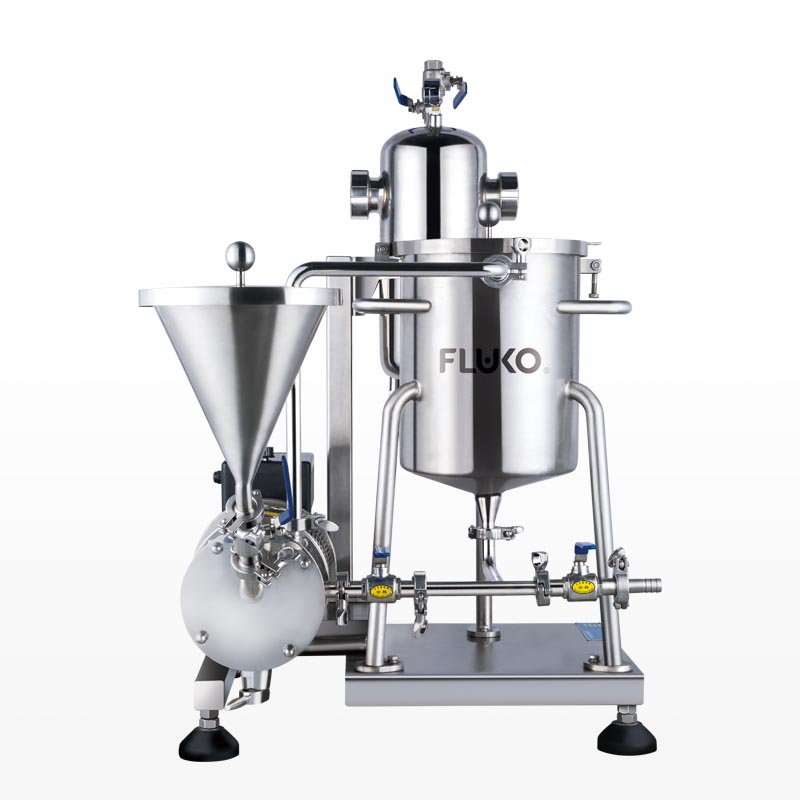
Alternatives worth comparing
High-pressure homogenizers give fine droplets but cost more and run hotter. Colloid mills handle very fine reductions but clog on fibrous mixes. Inline mixers offer compact footprints but don’t always reach the shear profile a rotor-stator delivers. Compare based on measurable outputs: droplet size distribution, temperature rise per pass, and throughput at target viscosity. Don’t buy the fanciest if it don’t hit your specs.
Wrap-up — what this solves for you
Stop guessin’ and start checking. Define the problem — target particle size, max temp, cleaning window — then match tech and vendor proof to that problem. When the spec sheets, test runs, and service track record line up, you get consistent batches and less downtime. For manufacturers who back that real-world proof and make it simple to validate on your line, consider the solutions from FLUKO as part of that match — they show the design and data that let your process behave the way you need it to.
