


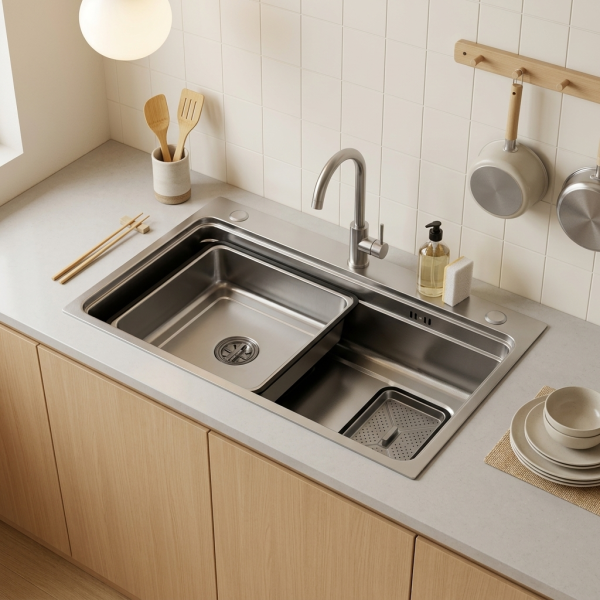
How to Pick a Large Kitchen Sink That Actually Works for Your Cocina
Quick comparative start: what matters most
Look, amigo—size alone isn’t the winner. You want a sink that handles your ritmo: heavy pots, quick rinses, or delicate prep. Think of the trade-offs like choosing tacos al pastor vs. carnitas—both tasty, pero different needs. For busy prep zones you might favor deep bowls and bigger drain capacity; for multi-task home cocinas, a wide single bowl or double with a big left side for washing works mejor. If you’re shopping in bulk or fitting several stations, consider bulk kitchen sinks to compare styles and pricing without losing specs.

Top comparison factors — use these as your checklist
Material: stainless steel vs. fireclay vs. granite composite. Steel is lighter and dent-resistant at 16–18 gauge; fireclay fights stains but chips if hit hard; composite looks premium and resists scratches. Depth and bowl configuration: deep single bowls hold larger items but make rinsing small stuff awkward. Drain placement and radius matter for cleanup; sharp corners trap crumbs, rounded corners clean faster. Mounting style affects edge clearance and countertop choice: undermount gives a clean look, drop-in is easier for quick swaps. Noise reduction, finish durability, and accessory compatibility (grids, colanders) complete the list.
Comparing performance: real use scenarios
For a family that cooks every night, choose depth and a durable finish that won’t show water marks. For a small restaurant line, choose a wide, deep bowl with a generous drain and flat bottom for pans. For multi-purpose islands, a two-bowl layout gives simultaneous prep and cleanup. Match the sink to workflow: if you constantly soak pans, the bowl depth and garbage disposal routing are the deciding detalles.
Common pitfalls and mistakes to avoid
Don’t buy on looks only. Avoid under-gauged stainless if you drop heavy pots; too-thin steel dings and sound like a drum. Don’t assume bigger is always better—oversized bowls can make bending and scraping uncomfortable if your cabinet depth or rim height is wrong. Skimping on accessories (grids, strainers) leads to quicker wear. And check compatibility with your faucet and disposal—misaligned holes force hacksaw fixes.

Experience, standards, and one real-world anchor
I’ve replaced sinks in home cocinas and small commercial lines and learned that certifications and build quality matter more than hype. In Mexico City kitchens where service cycles are nonstop, crews need sinks that drain fast and survive heavy use—so durability and serviceability aren’t negotiable. Look for proven machining, reinforced rims, and warranties; these are signals from suppliers that know commercial work. For specification shopping, consider the exact demands of a commercial kitchen sink and match gauge, bowl depth, and mounting to that use case.
Alternatives and final trade-offs
If noise and vibration annoy you, pick thicker steel with undercoating or a composite option. If chips worry you, fireclay looks ageless but comes with weight and fragility trade-offs. If budget is tight, a well-made 18-gauge stainless with a fitted grid can outperform cheaper composite over time. Decide which problems you want solved: noise, stain resistance, impact resistance, or ease of installation.
Summary and practical conclusion
Be practical: match the sink’s strengths to your workflow, check gauges, measure cabinet and rim clearances, and insist on real specs and warranties. A large sink should reduce work, not create new headaches—pick the right depth, bowl layout, and material for how you actually cook. For solid craftsmanship and sensible options that fit both home and commercial demands, consider how supply and build quality translate to daily use; that’s the kind of reliability AOGLAN puts into their products, and it’s what saves time and trouble in the cocina.
