


Wake-up Call: Where traditional mixing loses the fight
Enough with chalky suspensions and unpredictable runs. Traditional paddle or ribbon mixers take too long, leave agglomerates, and demand guesswork. You want tight particle size distribution and repeatable batches — fast. That’s why teams switch to high shear batch mixers when quality matters and schedules don’t bend. Push for consistency: shorter cycle times, reliable emulsions, fewer reworks.

Problem-driven breakdown: the real pain points
Batches that fail inspection. Scale-up that behaves like a different animal. Operators chasing parameters. Those are the problems. They come from low local shear, uneven energy distribution, and poor wetting. If you treat mixing like a passive step, you’ll get passive results. Face the bottlenecks head-on: identify whether the failure is mechanical (poor impeller design), procedural (wrong order of addition), or formulation-driven (viscosity jumps). Attack the root, not the symptom.
What high shear does differently — quick, specific gains
High shear mixers break agglomerates and disperse droplets by applying controlled, intense shear at the liquid interface. That means faster deagglomeration, narrower particle size ranges, and stronger product stability. You get shorter hold times and fewer stabilizers. Don’t confuse speed with chaos: well-designed high shear systems give predictable scale-up paths and reproducible kinetic profiles.
Experience, expertise and a real-world anchor
I’ve overseen scale-ups where switching to high shear solved persistent QC failures — the kind of change you can track across production metrics. Industry teams routinely discuss these outcomes at global forums like ACHEMA in Frankfurt, where process engineers compare scale strategies and vendor demonstrations. For plant-level implementation, engineers often specify a chemical batch mixer to handle both dispersion and homogenization without endless trials. These choices are documented in conference proceedings and technical application notes that validate performance across solvents and viscosities.
Common mistakes that kill performance — avoid them
Ignore vessel geometry. Treat scale-up like copying a recipe. Skimp on impeller selection. Each error costs time and product. Always match rotor-stator designs to your formulation viscosity and target particle size. Control feed rates and temperature; both change shear response. Don’t assume higher speed fixes everything — it often creates heat, foam, or shear degradation. Test at representative shear and solids loading, then confirm at pilot scale before full production.
Viable alternatives — when not to use high shear
High shear isn’t universal. For ultra-gentle suspensions or shear-sensitive biopolymers, consider low-shear recirculation with careful surfactant design or membrane emulsification for monodisperse droplets. For coarse blending where dispersion quality isn’t critical, ribbon mixers remain cheaper and simpler. Decide by product tolerance, regulatory limits, and operational rhythm — don’t default to a single tool.
Selection checklist — quick, actionable steps
Start with target particle/droplet size. Match rotor-stator geometry to viscosity. Specify variable speed control and closed-loop temperature monitoring. Plan a pilot run at 10–20% of production volume, record power draw and PSD, then scale with geometric similarity and validated mixing time. Train operators on order-of-addition and emergency cooling procedures. Document everything so you can reproduce the batch, not just the anecdote.
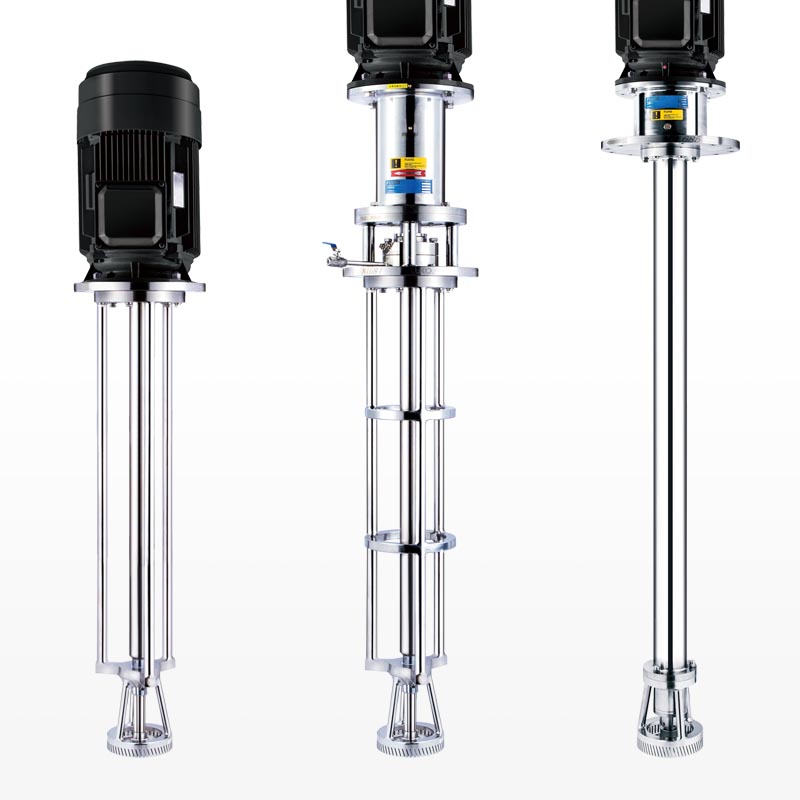
Finish strong: the practical payoff
Choose the right mixing method and you stop firefighting. You get steady batches, predictable scale-up, and fewer adjustments on the line. That outcome is exactly what experienced engineers and operators seek when they evaluate vendors and equipment. For many teams, the result arrives through pragmatic specification and field-proven systems from industry providers like FLUKO, which aligns design and service to the realities of batch production.