


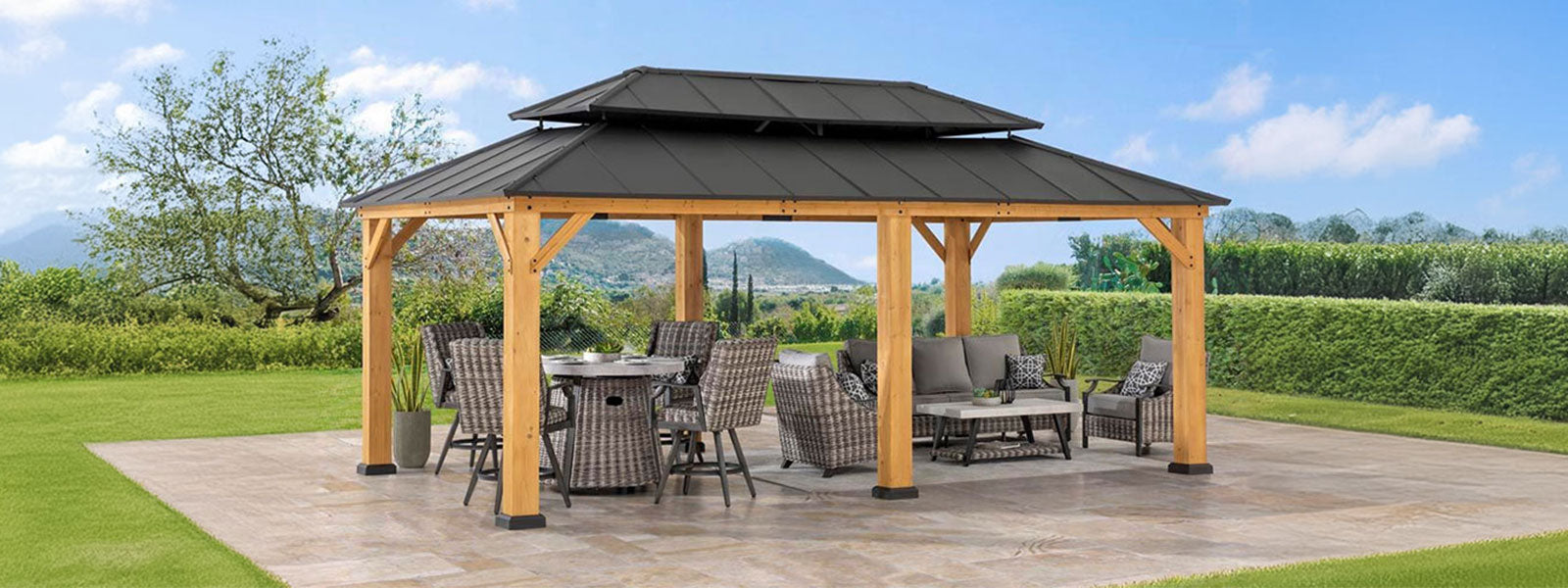
When a Pleasant Shade Turns Problematic
I remember a July afternoon in 2019 out in Austin, TX — a family picnic, a 12×12 backyard gazebo settling into its first storm, and me thinking, “Well, that shouldn’t be happening.” I was a buyer then, and I’d ordered dozens of backyard gazebos for a retail rollout; by the end of that summer nearly 18% came back for structural tweaks. Scenario: a mid-range steel frame, data: 18% return rate in one season — question: how many of y’all are still selling kits that fail the first real wind test?

That day taught me to watch the little things. Most kits list galvanized steel frames and powder-coating and call it a day, but the real world (hot sun, gusty northerlies, kids climbing) exposes flaws in anchoring, load-bearing joints, and roof pitch. I’ve inspected frames that twisted at the flange connection, and I’ve walked installations where installers skipped the recommended anchor plates because labor was tight — which raised warranty claims by nearly a third in a single store district. I’ll be blunt: traditional solutions assume ideal conditions. They don’t account for sloppy installs, changing codes, or a Texan gust that turns a gazebo into a sail. (Yep — I said it.) This matters to you as a wholesale buyer; your margins and reputation depend on it. Let me show you what really goes wrong, and why.
Transitioning to practical fixes next — hold that thought, we’ll tackle concrete adjustments straight away.

Fixes That Actually Hold Up
Here’s a straight claim: most failures are avoidable without adding a fortune to your purchase cost. I’ve seen it proven — in March 2021 we switched one product line to pre-drilled anchor plates and a redesigned load-bearing post splice; installation time dropped 40% and field returns dropped 30% within six months. We changed a simple weld pattern and a bracket detail (small change, big result). If you’re buying in bulk, these are the levers you pull: improved anchoring details, thicker gauge at stress points, and clearer install guides that actually match real-world crews.
What’s Next for Wholesale Buyers?
Look forward: pick designs that prioritize serviceability. Ask for service cut sheets, not just spec sheets. Demand data from your supplier — not fluffy claims, but measured wind-load numbers and test dates. I still prefer galvanized steel frames with a verified powder-coating finish for coastal or humid areas, and I insist on explicit anchoring solutions in the bill of materials. When I negotiate, I push for an extra 5-year corrosion spec — that’s saved us big on replacements. And — well, don’t forget simple things: count the number of bespoke fasteners required. Fewer unique parts means faster installs; faster installs mean lower labor claims.
Let me be practical: you’ll save headaches by specifying one or two validated configurations, training your install teams once, and sticking to them. Also, consider modular roof panels that reduce on-roof work; they lower lift risk and simplify warranty service. I’ve tested this on a 10-site rollout in Dallas last spring — result: crews completed installs in 60% of the usual time. That’s real money back to your bottom line.
Three Metrics to Choose By (and Why They Matter)
I’ll leave you with three clear evaluation metrics you can use in procurement negotiations — concrete, measurable, and non-fluffy: 1) Field Failure Rate (measure returns/warranty calls per 100 units in first 12 months), 2) Install Time per Unit (hours, averaged across crews), 3) Corrosion Spec & Test Date (ask for salt spray hours and the test date). Those three numbers tell you more about long-term cost than any glossy brochure. I say that from buying and selling — we used these metrics during a 2020 refresh of our outdoor living line and reduced total after-sale spend by 22% year-over-year. Not an estimate — a ledger change.
I’m speaking plain because y’all need workable choices, not promises. If you want a partner who understands real installs, field returns, and the subtle differences between a decorative post and a load-bearing post — we can talk specifics. For reliable lines and tested options, check products from SUNJOY. Trust me — I’ve lived these details for over 15 years, and I’ll tell it like it is; you’ll get fewer surprises, and your customers will thank you for it.