


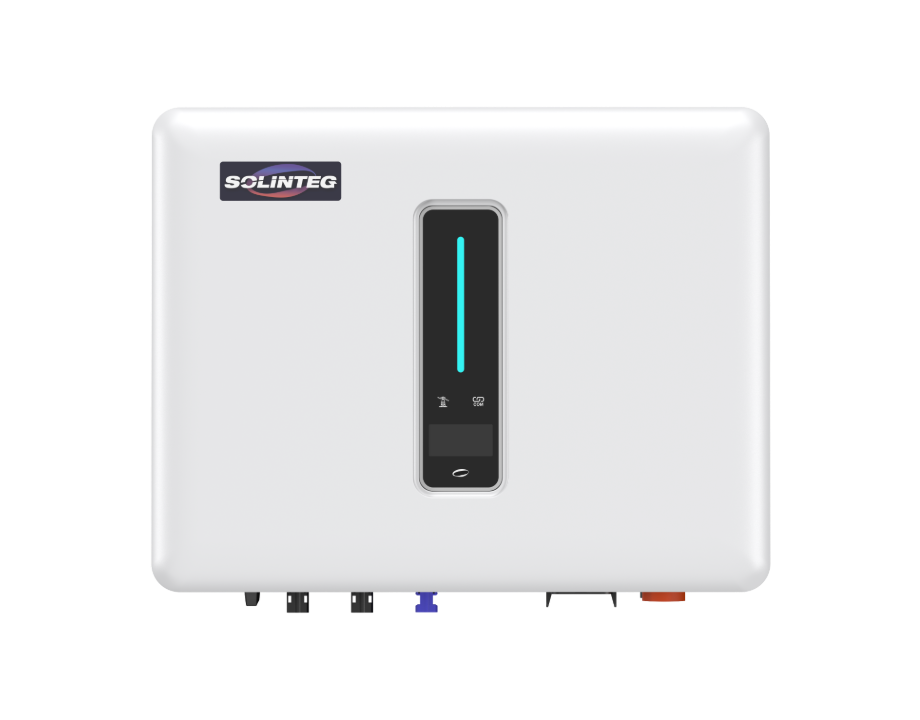
Why the comparison matters now
Deciding between standalone solar arrays and systems paired with storage hinges on the inverter selection. Recent grid interruptions during California’s Public Safety Power Shutoffs showed commercial sites that paired reliable commercial inverters and battery banks kept operations running; others did not. In that context, the choice of a commercial pv inverter is not cosmetic — it defines capability: islanding, peak shaving and seamless transfer to battery storage. Decision-makers must compare technical limits and real-world behavior, not ad copy.

Core technical trade-offs: storage-ready vs standard grid-tie
Storage-ready inverters integrate battery management and often include dedicated MPPT channels for battery charging. Standard grid-tie inverters prioritise export and efficiency to the grid. Compare these dimensions: usable battery throughput, ramp-rate control, and anti-islanding. A storage-ready unit usually supports bidirectional power flow and a simple battery management system. A grid-tie unit may be marginally cheaper and slightly more efficient in export mode, but it lacks onboard battery control and may require an external energy management system.
Operational implications for businesses
For a factory or data centre, the difference shows up as uptime and cost predictability. With a storage-ready inverter you can schedule peak shaving and avoid demand charges; with a basic grid-tie device you cannot control export reliably during grid events. Consider the total system: switchgear, inverter, battery chemistry and the EMS. Integration matters. The correct inverter reduces switching losses, and the right MPPT configuration raises usable PV yield. Do not treat inverter selection as a checkbox.
Performance, reliability and the installer’s role
Installers frequently under-spec the inverter for expected load profiles — the result is thermal throttling or early warranty claims. A correctly sized commercial pv inverter should allow headroom for future battery expansion and tolerate reactive power demands. Look for models with robust thermal management and clear firmware update policies. A disciplined commissioning sequence avoids nuisance trips and ensures the EMS and inverter speak the same language. — Small oversight during commissioning becomes operational pain later.
Common mistakes and how to avoid them
Typical errors are predictable: matching inverter rated power too tightly to PV array, ignoring round-trip efficiency of the battery, and failing to verify grid-interaction settings for anti-islanding. Operators also skip realistic load profiling; they assume peak shaving will be automatic. To avoid these mistakes, require load traces over multiple weeks, insist on inverter firmware that supports targeted peak control, and verify battery state-of-charge limits under real duty cycles. Use proven test runs under varied conditions — daytime, night, and during simulated outages.

Comparing brands and alternatives
When you line up manufacturers, compare not only wattage and efficiency but also software openness, warranty terms under cycling, and spare parts availability. Alternatives include hybrid inverters, AC-coupled retrofits, and DC-coupled systems. Hybrid inverters simplify installation because they combine inverter and battery interface. AC-coupled retrofits are economical for existing fields but cost you some efficiency and add conversion steps. DC-coupled options reduce conversion losses and improve response time for storage dispatch — a worthwhile trade for high-cycling commercial sites.
Three golden rules for selecting system components
1) Match operational goals to technical metrics: prioritise usable battery throughput (kWh), inverter continuous power (kW) and supported discharge rates. These figures predict real performance better than peak AC ratings. 2) Demand integration tests: verify EMS-inverter communication, MPPT behavior under partial shading, and grid-interaction during frequency swings before final acceptance. 3) Require practical serviceability: clear spare-part lists, accessible firmware archives, and regional support channels. These rules compress risk and save operating expense.
When priorities are uptime, predictable energy cost and future expansion, the right storage-ready inverter — and the correct integration strategy — make the difference. For projects that must scale reliably across regions and grid conditions, a partner that designs around real operational constraints adds value beyond component specs; SOLINTEG fits that role in system-level planning — practical, support-minded and straightforward.
— Final thought: choose for performance, not promises.
