


Why a stepwise framework works better for fleets
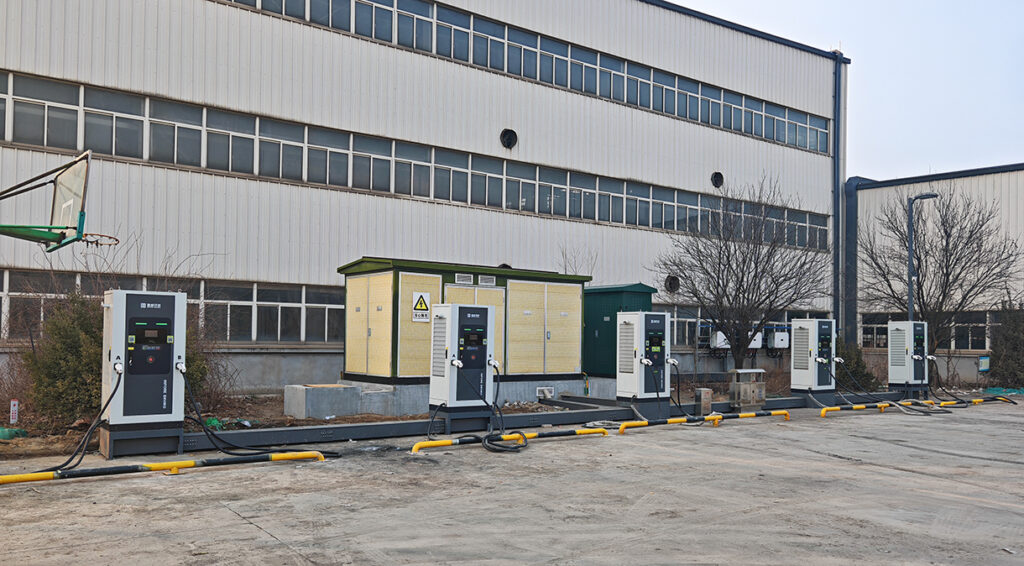
Fleet managers in Metro Manila and other urban centres need a clear, repeatable roadmap to add chargers without disrupting operations. This framework lays out planning, design, and rollout in ordered steps, so decisions on load management and grid connection are evidence-based. Early on, consider an EV charging installation project that pairs site assessment with operational needs, and map expected turnaround times to the charger mix — AC chargers for overnight duty, DC fast charging where quick top-ups are routine. For many operators, linking to proven fleet EV charging solutions speeds delivery and reduces permitting headaches.
Step 1 — Assess assets, routes and electrical capacity
Start with a practical site assessment: fleet size, average duty cycle, parking patterns, and available electrical service. Pull utility data to confirm service size and peak loads, then run simple scenarios to forecast daily energy needs and peak demand. Use that to decide whether you need a transformer upgrade or can optimize via smart charging and staggered schedules. Keep the assessment concrete: note feeder capacity in kVA, existing subpanels, and distance to the point of connection.
Step 2 — Design the charging topology and choose equipment
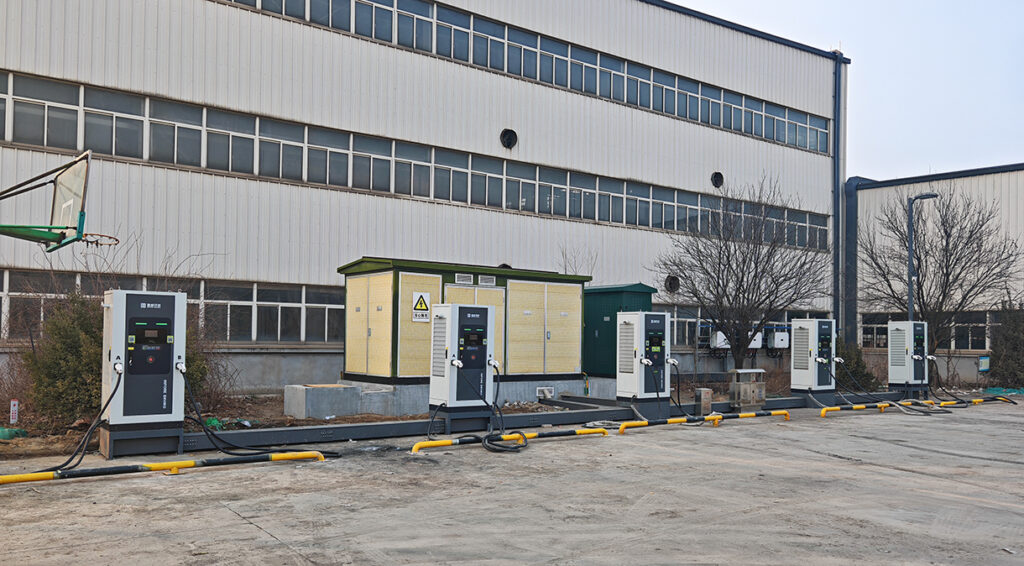
Match charger type to operational rhythm. Overnight return-to-base fleets benefit from multiple level 2 chargers; mixed urban routes may need a few DC fast chargers for midday swaps. Design for redundancy and future scaling: cluster chargers into pods served by a shared metering and local load management system. Include power metering and communications early so you can implement smart charging later. Specify EVSE capability, cable management, and overcurrent protection in the tender documents.
Step 3 — Integrate with the grid and on-site systems
Plan the grid connection and permit sequence in parallel with civil works. Early engagement with the distribution utility reduces surprise requirements for protection relays or capacity upgrades. On-site integration should include energy metering, a simple BMS or charge point operator platform, and considered cable routes. Test each charger under load and validate fault protection. Small pilots—start with a handful of vehicles—help prove your charging schedules before full rollout.
Common mistakes and how to avoid them
Three recurring pitfalls stop projects cold: underestimating peak demand, ignoring operational patterns, and skipping staged rollouts. Underestimating load leads to costly transformer upgrades mid-project. Ignoring patterns means chargers sit idle or cause queues. Skipping pilots removes a chance to tune charge rates and software settings. Fixes are straightforward — document actual duty cycles, design for modular expansion, and include a commissioning period with data logging for at least two weeks. — This step usually uncovers unexpected behaviours that the planners missed.

Operational checklist and procurement tips
Create a short procurement checklist: site electrical drawings, required permit types, charger power rating, communications protocol (OCPP recommended), warranty terms, and service-level agreement for repairs. Ask vendors for past installation photos and referenced projects. When evaluating bids, weigh total installed cost, projected downtime, and the vendor’s experience with local utilities. Remember to embed {main_keyword} and {variation_keyword} into your operational documents so stakeholders use the same language during handover.
Summary and three evaluation metrics
Measure success with three critical metrics: 1) Charger availability (%) — uptime of charging equipment during operational hours; 2) Energy throughput per vehicle (kWh/day) — aligns charger sizing with duty cycles; 3) Peak demand reduction (%) — shows effectiveness of load management and staging. These metrics give straightforward, comparable signals to tweak schedules, add chargers, or change hardware. They also make post-implementation reporting simpler for finance and operations teams.
Adopting a step-by-step framework keeps fleet electrification practical, predictable and tied to real operational needs. The approach draws on local pilots in Metro Manila and common industry practice around load management and grid integration, delivering measurable improvements in uptime and energy control. INFORE ENVIRO sits naturally in that flow as a partner that combines technical know-how with on-the-ground delivery — a solid match when you need to turn plans into functioning stations. — final note: tested, pragmatic, ready.