


Introduction — a near-future glance
What if the motors around us could sense more than rotation—could predict, adapt, and nudge a whole production line toward efficiency? In workshops and warehouses, Electrical Motor Products are quietly getting smarter; pilots already report up to 15–20% energy savings in selective retrofits (early results, yes, but telling). I keep asking: when does smarter hardware stop being a gadget and start being the backbone of daily operations?
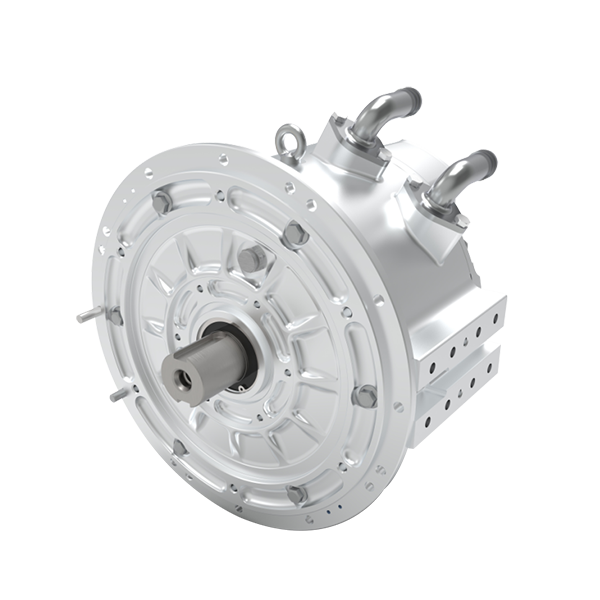
Picture a factory floor that whispers its needs to a central system—some machines twitch, others settle into a rhythm, and unexpected stalls vanish. I like to think of that as a soft intelligence layered on top of stiff iron. There’s data—operational hours, kilowatt draw, mean time between failures—feeding models that learn. Still, what really changes for the people who run the floor? That’s the question that pushes me to dig deeper, and it’s what I’ll explore next.

Unpacking failure points: why classic setups trip up modern goals
Let me start with the concrete: many teams still rely on legacy setups—fixed-speed drives, manual tuning, and separate diagnostics. When I look at an ac motor and controller in the field, the common faults feel familiar: oscillations from poor torque control, heat spikes because of inefficient power converters, and blunt fault codes that say nothing useful. These problems don’t just waste energy; they eat operator time and trust.
So what’s the core technical snag?
First, the closed-loop control is often tuned for a single operating point. That works until loads change or the ambient temperature shifts. Second, diagnostics live in silos—motor data in one logger, PLC logs in another. No one piece shows the full picture. Add a bit of latency from remote telemetry and—boom—your predictive model misses the window to prevent a fault. Look, it’s simpler than you think: better sensing and smarter control logic beat brute-force safety margins every time.
From my hands-on checks, I see three recurring technical gaps: inadequate variable frequency drive (VFD) integration, coarse-grained torque sensing, and low-resolution telemetry that fails to leverage edge computing nodes. When teams try to retrofit, they often swap hardware but leave the same control philosophy in place. I feel we need to focus not only on component upgrades but on how those parts talk—power converters, controllers, and the analytics stack must form a cohesive loop. Otherwise, upgrades are cosmetic, not transformational.
Future outlook — comparing paths forward and what to choose
Looking ahead, I compare two clear paths: methodical retrofit versus full-system redesign. In many plants, stepwise upgrades—better sensors, improved VFD tuning, and smarter controllers—deliver fast wins. Alternatively, some operations leap to integrated electric motor solutions that combine drives, controllers, and telemetry as a single package. I’ve seen both work; your choice depends on downtime tolerance, capital, and the skill set of your team.
What’s next for implementation?
We’ll likely see tighter coupling between motor controllers and cloud analytics—yet with an important twist: real-time decisions often must live at the edge to avoid latency penalties. So, hybrid models win: local control for immediate loop closure, cloud for long-term optimization. I’m convinced this mixed approach will become the norm—funny how that works, right? — and it changes how we evaluate solutions.
To finish, I’ll offer three practical metrics I use when choosing systems: 1) measurable energy reduction under representative loads (not peak values), 2) mean time to detect and recover from faults, and 3) ease of integration with existing PLC and SCADA stacks. These metrics keep discussions concrete. If you want suppliers that balance hands-on support with robust hardware, consider vendors who demonstrate real-world data and solid service—like Santroll. I trust results I can measure; I expect partners who help me get there.